


VALERIO VILLANI
- 1 day ago
- 4 min read
The Body as an Inner Landscape
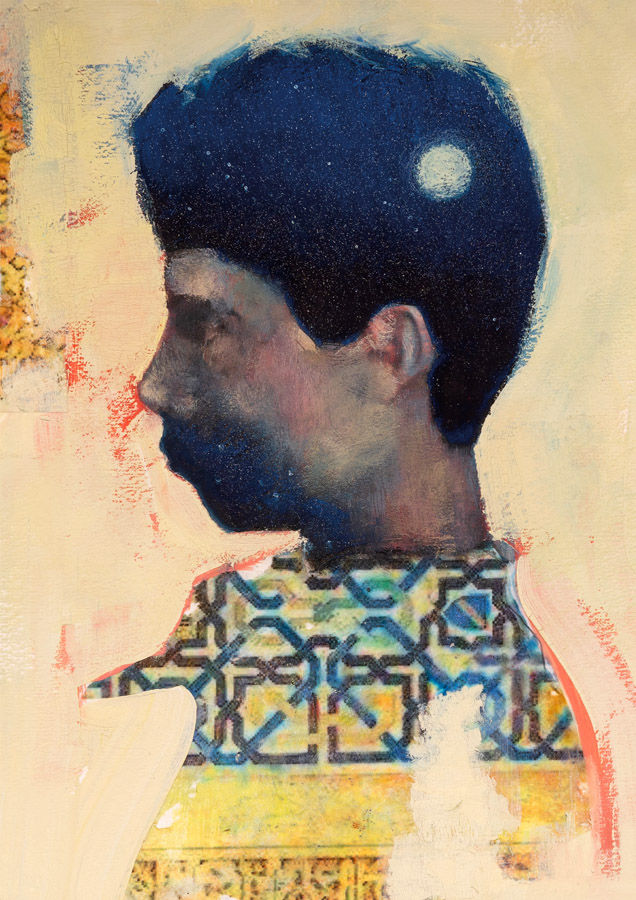
In Valerio Villani’s paintings, the human figure becomes a kind of map. A face, the position of a body, a trace of colour, and the painterly gesture lead towards a space that opens beyond the visible image. The Italian painter and illustrator builds his work between contemporary figuration, drawing, and editorial illustration, with a particular sensitivity to what a painting can hold in a single glance: memory, vulnerability, and change.

His works Silence, Rebirth, Il ritorno, La fine, and Dreaming draw us into a form of painting in which the soul takes shape through figure, colour, and composition. In this conversation, the artist speaks about painting as a space of encounter with the self, about the threshold between idea and process, about the passage from the gallery to the book, and about the way a single image can carry an entire inner story.
Your works often place the human figure on the threshold between the inner and outer worlds. How do you recognise the moment when that state has found its full presence within the painting?
In my paintings, I try to follow an inspiration that comes from the reality I experience and from what surrounds me. A kind of silence often accompanies the figures, creating a dialogue among them and with the reality I construct around them. It is not always easy to find the exact point between silence and dialogue, but when it reveals itself, the image breathes.
In your work, the figure rarely appears as a conventional portrait. It seems to carry an inner state. How clearly do you know what you want to express before you begin, and how much of the meaning emerges as you paint?
As I mentioned, the path from the initial idea to the final result is never fixed, and I often allow part of the work to be guided by the act of painting itself. I believe that, in order to keep a sense of energy and communication alive, the idea should not be planned too rigidly. I often let myself be surprised by what appears, and by what the process adds along the way.
Your practice moves between painting and illustration for publishing. What changes in your way of thinking when you move from the open space of painting into the narrative structure of a book?
The structure of a book requires a compelling narrative rhythm, while each individual image has to condense the story into a single visual moment. Moving between different illustration formats can be demanding, but I believe I am a versatile artist, able to work within different frameworks. My thinking adapts to the kind of narrative required, and I try to stay as close as possible to the theme while preserving the character of my visual language.
Colour plays a powerful role in shaping the atmosphere of your works. Do you begin with colour, with the figure, or with a feeling you want the painting to hold?
I begin with an idea, which usually becomes a basic drawing that I use as a guide. I often leave the image to rest for days while I try to understand the emotion I want to capture. Colour plays a fundamental role in giving the image its visual character. In the same way, gesture and the painterly mark are crucial in bringing the different painted layers together into the final image.


You describe the soul as a space of knowledge, memory, and self-awareness. How does that idea become part of the painting itself, through the figure, colour, gesture, or composition?
For me, the soul is an intimate and personal landscape, and I approach it as such. Composition plays an important role, as does the arrangement of the elements: the figure itself, its posture, and its gestures. The idea always emerges through an emotion shaped by a strong message. In every work, I try to bring everything together, condensing drawing, gesture, and colour into a single visual approach. Making an intimate landscape, or a state of mind, visible is complex, but I try to do it as sincerely as possible.

Over the years, your work has appeared in different artistic contexts, from exhibitions and awards to publishing projects. What has this shift in setting, from the gallery to the book, revealed to you about the way an image communicates with its audience?
I always try to remain true to myself and to my artistic intuition, whatever the context. This helps me avoid distorting my work or pulling it too far from what I want to express. It also keeps it from becoming self-referential. I do, of course, select my works according to the context, adapting each one to the final concept, whether it is for a gallery or an editorial project.
In Silence, Rebirth, Il ritorno, La fine, and Dreaming, we encounter ideas of return, ending, dreaming, renewal, and inner transformation. Do you see these works as separate moments, or as parts of a shared inner landscape?
As I mentioned earlier, everything more or less follows the idea of a narrative of the human soul, understood as both an inner and an outer landscape. I try to move beyond the traditional figurative idea of the figure within a landscape, or at least that is my intention.
His words bring the paintings closer to the mind and hand behind them. In his work, figure, colour, and gesture carry the trace of an inner movement, from dream to return, from ending to renewal. The strength of his painting lies in his ability to turn a fragment of a face, the position of a body, or a layer of colour into a space where the viewer pauses before a feeling of their own.


Valerio Villani


