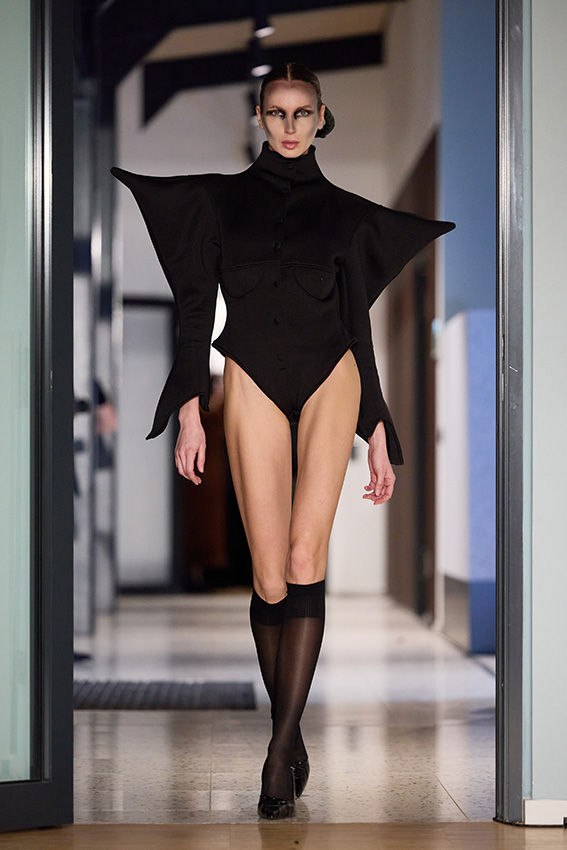
SHOMA THE LABEL
- 16h
- 5 min read
WOVEN INTO THE FABRIC OF THIS BRAND IS THE RHYTHM OF THE CARIBBEAN, A MEMORY THAT NEVER FADES,
AND A FORM THAT HONORS THE BODY

In Trinidad, clothing carries meanings deeper than trends. It is a language shaped by history, belonging, and the everyday rhythms of life. From that language, from that soil, Shoma The Label emerges, a fashion brand that blends sculptural precision with bodily awareness and the richness of the Caribbean cultural memory. Shoma Persad, founder and designer, crafts collections guided by emotion rather than season, and by atmosphere rather than aesthetics. Each silhouette, each print, each detail carries an emotion, a rhythm, and a quietness drawn from the place it was born. In the conversation that follows, we share fragments of that creative inner world through words that hold the same depth as her designs.
In Trinidad, fashion is identity. It is Carnival, protest, reverence, and joy. Shaped by European colonialism, the transatlantic slave trade of Africans, and the indentured labor of East Indians and Asians, fashion in Trinidad has always been a form of survival and expression. After emancipation in the 1830s, formerly enslaved Africans used performance, masquerade, and dress to reclaim space, giving rise to Canboulay, rituals tied to sugar cane harvests and resistance. When colonial authorities tried to suppress these traditions, the Canboulay Riots of 1881 erupted, anchoring Carnival as a symbol of defiance and transformation. Since then, it has grown with us, reflecting every chapter of our story. Fashion in Trinidad isn’t occasional; it is constant, part of the lived experience from birth.
Growing up there, I was immersed in that reality. Carnival teaches you early that clothing speaks. A headpiece, a hemline, and a burst of color all hold meaning. They tell you where you’ve come from and how you move forward.
Whether you’re a vendor or a designer, you inherit that knowledge.
For me, fashion became a way to offer something new to that conversation. I wanted to explore our relationship with fine tailoring and structure without losing the rhythm of our history. I wanted to see if our stories could be told through elegance, not only spectacle. That impulse shaped my first collection, Tropical Masquerade, where I began mapping identity onto silhouette and fabric.
My business background helped me turn inspiration into a sustainable endeavor. Each collection has deepened that vision. Harvest honored the women and labor that built our economy. Magic Island explores the mysticism that shapes our culture. Casa Caribe bridged Trinidad and Latin America, showing how our aesthetic language travels.
Fashion is my truth. It allows me to tell our story, not just mine, but all of ours, in a form that holds history, beauty, and purpose.
When you begin working on a new collection, what usually comes first: a feeling, a place, an atmosphere, a material? How does that creative beginning take shape, regardless of the theme?
It always begins with a feeling. That feeling might be longing, curiosity, grief, or joy, but it always comes from somewhere deeply personal. Each of my collections has started that way. Tropical Masquerade came from the feeling of pride and performance I saw in Carnival. Harvest was rooted in a sense of reverence and historical weight. Magic Island captured awe, the kind that lives in stories passed down through generations.
Casa Caribe was born from recognition and connection, the way another culture can feel both foreign and familiar.
Once that emotional spark takes hold, I begin to research. I look at fabrics, archives, textures, music, poetry, landscapes, and oral histories. I try to understand how that feeling can live in a pattern or how it might be expressed through the weight or flow of a textile. From there, I collaborate with artisans to translate that inner world into print. The fabric becomes a kind of language, and the rest of the design, the silhouette, the cut, the construction, grows out of that. It’s not just about creating clothes. It’s about honoring what we carry and giving it shape in a way that feels true.


Photos: Juan Camilo Pérez
Your collections are visually strong, yet always feminine. How do you perceive the relationship between the form of a piece and the personality of the woman wearing it?
The relationship between form and personality is something I constantly think about, especially in the Caribbean context.
Here, strength and style go hand in hand. If you’ve ever seen the work of our local tailors and seamstresses, you’ll understand that structure and boldness are not trends; they’re traditions. Our garments are grounded in technique, and that grounding allows me the freedom to shape collections that speak to something deeper.
Feminine expression is never static. It shifts across generations, cultures, and moods. I’ve seen how it evolves in our society, and that evolution influences how I shape each line.
For me, femininity isn’t one thing. It’s power, softness, flair, subtlety, drama. It’s whatever the woman wearing the piece wants it to be. That’s why structure is such a key part of my brand. Strong tailoring gives the wearer a solid foundation. From there, the fabric, the silhouette, the colors - those elements let her define her own narrative. My goal is not to dress a woman to become someone else, but to help her show up fully as herself. Whether she’s walking into a boardroom or dancing in a courtyard, I want her to feel seen, centered, and beautifully in control.
If someone experienced the Caribbean for the first time by wearing one of your pieces, rather than seeing a photo or reading about it, what would you hope they feel in that moment?

If someone were to experience the Caribbean for the very first time through one of my garments, I would want them to feel something visceral, a sense of welcome, wonder, and rootedness all at once. Not just the warmth of the sun, but the warmth of our people. The kind that greets you with laughter before words. It’s the kind you feel in a rhythm, a scent, a glance.
Through color, texture, and form, I try to capture the Caribbean, layered, complicated, and breathtaking. I want them to sense the strength of our ancestors, the fusion of cultures that built us, the echoes of French patois, Bhojpuri lullabies, Yoruba chants, all woven into the fabric of who we are. The rustle of cane fields. The grace of a Moko Jumbie. The hush of a seaside morning in Mayaro. More than anything, I want that person to feel possibility. Like they’ve stepped into a story that didn’t need to be explained because their spirit already understood it. If someone slips on a Shoma the Label piece and feels both rooted and radiant, like they belong and are becoming, then I’ve told the right story. Because that’s the Caribbean: not a place you visit, but a feeling you carry with you.
The atmosphere of the Caribbean lives in Shoma Persad’s work, in its textures, its stillness, and the emotions it gently evokes. In the fabric of her collections, there is the scent of earth, a memory that doesn’t fade, and a gaze that asks for no permission.
Shoma The Label was born from an intimate relationship with the body, with time, and with womanhood, a space where identity gently takes shape. This is fashion with an inner voice. Rhythmic. Grounded. Without the need to prove itself.
SHOMA THE LABEL