


De Vie
- 4 days ago
- 4 min read
Originally published in AH Magazine, International Issue No. 7.
Presented here in a mobile-friendly format for subscribers.
What Comes Before the Glass
In Paris, we found a place where contemporary hospitality begins with questions: where each ingredient comes from, how long the relationship with a producer has lasted, where the guest sits, how the glass is chilled, and how oyster shells from an earlier version of a dish make their way into a new martini. Alex Francis, co-founder of De Vie, spoke to AH Magazine about a project in which Comptoir, Bar, and Cave bring together the kitchen, the drinks programme, the retail space, French producers, and craftspeople.

Today, the name De Vie brings together Comptoir, Bar, and Cave, three parts that work in different ways while giving equal attention to origin, season, and creativity. Comptoir is the most luxurious expression of the project, with fine-dining tasting menus and the culinary programme at the forefront. Bar is closer to a classic cocktail bar, serving à la carte food and drinks, while the drinks menu remains its primary language. Cave came first in 2024, as a pop-up during the Olympic Games, and now functions as De Vie’s retail arm, bringing together independent producers and craftspeople working across French spirits, wines, beers, and non-alcoholic drinks. For Francis, the name De Vie sets the same expectations for guests across all three formats: locality, seasonality, and creativity, whether they have a tasting menu, a cocktail list, or a shelf lined with bottles in front of them.
De Vie builds relationships with producers over time. The products they choose, and the way they work with them, shift with the season, the year, and the needs and priorities of the people behind them. Francis says they are drawn to people who work carefully, with long-term care for the land, the raw material, and the process. Some of them do not carry organic certification or a similar accreditation because such labels do not always accurately reflect their work; De Vie therefore relies on knowing the producer, understanding the product, and sharing the same values. In Comptoir, that same choice continues through the set menu: every dish and every drink has its place in the sequence of the evening. Guests sit close to the kitchen and the bar, close enough to see the final movements before a dish or a glass reaches them. The kitchen team prepares for service in an open setting, where every finishing step remains visible.
The final assembly of each drink takes place in front of the guest.
When we asked Francis for an example of an ingredient that changes both a dish and a drink, he returned to the oyster. The team kept the shells from an earlier version of the dish, infused them in pear eau-de-vie over the summer, and distilled that infusion at the end of the year. The distillate was blended with a small amount of French dry vermouth to create a mineral, slightly saline martini, served directly in the oyster shell after the oyster. Adam Purcell, executive chef, serves the oyster with green apple and sorrel granita, allowing the pear profile in the drink to carry through the chill of the granita, the herbal note of the sorrel, and the marine character of the shell. What began as a remnant of an earlier dish passes through months of work: infusion, distillation, a blend with vermouth, the kitchen, the bar, and service before reaching the guest as a martini made from the shells of an earlier version of the same dish.


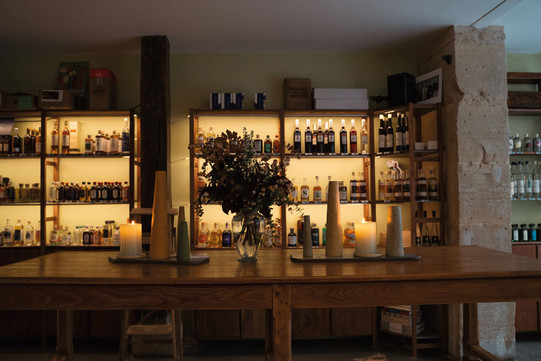
Bar De Vie and Cave De Vie, Paris. All photographs: Millie Tang. Courtesy of De Vie.
At Bar De Vie, where the cocktail menu defines the identity of the bar, the absence of ice shifts much of the work into preparation: drinks are pre-chilled and pre-diluted, each workstation has refrigeration, counters sit higher, and fridge-freezer units are built beneath the surface. The stations are often fitted with kitchen, coffee-making, and refrigeration equipment, with conventional bar tools playing a smaller role. The final assembly of each drink takes place in front of the guest. For stemmed glasses, the team uses liquid nitrogen, allowing them to chill the glassware without the risk of breakage in the freezer. For drinks usually served on the rocks, they developed ceramic vessels with a local ceramicist, each with a built-in element designed to keep the drink cooler for longer than glass would.
When Francis speaks about the decisions that remained fixed from the beginning, he returns to French products, producers, and craftspeople. The same choice that determines what goes into the glass also determines who makes the counter in Comptoir or the stools in Bar. Food became part of De Vie early on because, in previous projects, it had been missing as a natural continuation of their work with cocktails and mixed drinks. The pear carries the trace of the shell, the glass is chilled with nitrogen, the ceramics retain the cold, and the counter and stools come from the same decision to work with French craft as the distillate, the wine, and the oyster.


Comptoir De Vie, Paris: Bar Snacks, Chicken, Oyster, and Mushroom Crisps. Photography: Millie Tang
DE VIE | WEB
This article is part of AH Magazine Issue No. 7.
To experience the full digital edition, visit your private Digital Library.


